Intoduction to Internet of Things
1. The Evolution of Connectivity: A New Engineering Frontier
As you begin your journey into the complexities of advanced digital systems, it is easy to assume that the pinnacle of connectivity is already in your pocket. You have grown up with smartphones and networked computers—devices designed from their inception to be online. However, as your mentor in this field, I want to emphasize that the real revolution we are witnessing today is not found in these familiar screens. Instead, it lies in the integration of “unconventional” endpoints into our digital ecosystem. We are moving toward a world where the Internet of Things (IoT) brings unique identities and connectivity to objects that were once entirely analog, mechanical, or isolated.
The Internet of Things is formally defined as a network of “things” that possess unique identities and are connected to the Internet. While 4G-enabled phones and traditional PCs are part of this web, the engineering focus of IoT centers on the configuration, control, and networking of devices not traditionally associated with the internet. This represents a fundamental shift in our design philosophy. We are no longer merely facilitating person-to-person communication; we are now tasked with the holistic configuration and precise remote control of the physical world. This transition expands the engineering landscape from building interfaces for human eyes to building nervous systems for machines.
2. The Anatomy of “Things”: From Sensors to Engines
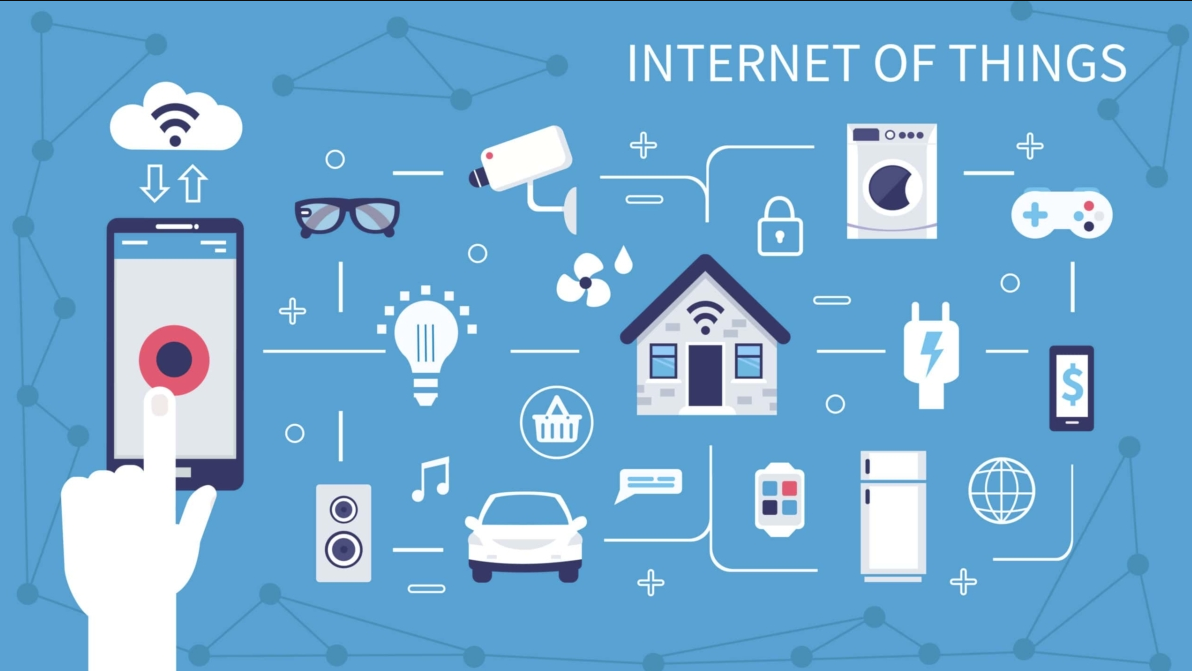
To design effective systems, we as engineers must understand the diverse range of IoT endpoints—which include a vast array of devices, appliances, and machines—that now populate the digital universe. An endpoint is no longer just a terminal for a human user; it is a mechanical or electronic component granted a digital voice. To architect a robust system, you must first recognize the varied “things” we are now networking.
Based on our current technological landscape, these IoT-enabled devices can be categorized as follows:
Environmental & Agricultural Tools:
- Irrigation pumps and specialized sensors used to monitor soil or climate conditions.
Utility & Infrastructure Components:
- Smart utility meters that provide real-time data on consumption.
Consumer Electronics & Appliances:
- Bluetooth-connected headsets and smart thermostats.
Automotive Systems:
- Control circuits for the engine of an electric car.
When we compare these to their traditional counterparts, we see a true revolution in capabilities. A standard irrigation pump is a simple mechanical tool that moves water; an IoT-enabled pump is a networked endpoint that can be configured remotely and controlled based on real-time environmental data. This transformation from a standalone machine to a networked participant is the cornerstone of modern engineering.
While the hardware listed above serves as the physical foundation of the system, these endpoints have only become viable through a specific set of technological and economic catalysts.
3. The Engines of the IoT Revolution
We are currently operating within a technological “perfect storm.” The global scaling of IoT is not an accidental trend; it is the result of an economic and technical synergy that allows us to deploy intelligence at a scale previously thought impossible.
The growth of this sector is propelled by five key drivers:
- Sensor Networks: Enabling the granular collection of physical data.
- Mobile Devices: Advancing the general capabilities of portable technology.
- Wireless Communications: Providing the connectivity required for disparate devices to communicate without physical tethering.
- Networking: The protocols that allow for seamless data exchange.
- Cloud Technologies: The centralized power required to store and process the vast amounts of data generated.
This convergence of advanced capabilities and lower costs has created a massive shift in market opportunities. Because costs have dropped, we can now justify the instrumentation of things that were previously too inexpensive to network, such as a basic utility meter or a simple home appliance. For industry players, this opens a “universe” of new markets for hardware and software components, from the endpoints themselves to the hubs and control centers that manage them. However, as we build these connections, we must remember that the hardware is merely the infrastructure. The true value lies in the data.
4. The Data Hierarchy: Transforming Raw Input into Knowledge
For the modern engineer, raw data is not the end goal—in fact, in its raw form, data is a liability. Unprocessed data streams represent significant storage costs, “digital noise” that masks critical signals, and potential security risks. Your objective as an engineer is to move past the burden of “big data” to achieve “smarter performance.” This requires a rigorous transformation process where raw input is contextualized and processed into something useful.
We can visualize this transformation as a hierarchical flow:
Data
(Raw input from sensors, appliances, or machines)
        │
        ▼
Information
(Processed, filtered, and categorized data)
        │
        ▼
Knowledge
(Structured information used to infer system status)
To move from lower-level data to actionable information, IoT applications must perform several critical functions:
- Filtering & Processing: Removing noise to focus on relevant signals.
- Categorizing & Condensing: Organizing data into logical groups and summarizing it for system efficiency.
- Contextualizing: Adding meaning by relating data to its environment or its users.
Once this information is structured, it allows the system to infer knowledge about its environment, its users, and its operations. This knowledge is what enables a system to progress toward its objectives intelligently. Without this process, we are just collecting noise; with it, we are creating intelligence.
5. Conclusion: A Call to Action for Future Engineers
As you move forward in your studies, always remember that the scope of IoT is not limited to the act of “connecting things.” While the hardware is impressive, the core mission of the Internet of Things is to execute meaningful applications that achieve common user or machine goals.
The next generation of engineering is not defined by the sheer number of devices we can put online, but by the “smarter performance” we can extract from them through the inference of knowledge. I challenge you to look beyond the hardware and the connectivity. Your role is to build systems that don’t just communicate, but truly understand and respond to the world around them. In this new era, the most impactful engineering happens when we look beyond the screen and focus on the intelligence we embed into the very fabric of our environment.
More from "IoT And Its Applications"
Machine-to-Machine (M2M) Communication
Learn about Machine-to-Machine (M2M) communication, its architecture, M2M gateways, communication networks, and applications in modern IoT systems.
IoT Levels – Level 6 Architecture
Learn about the architecture, working, and applications of IoT Level-6 systems, where multiple independent IoT nodes communicate directly with the cloud and a centralized controller manages the entire system.
IoT Levels – Level 5 Architecture
Learn about the architecture, working, and applications of IoT Level-5 systems, where multiple end nodes communicate through a coordinator node for cloud-based storage, analytics, and monitoring.